
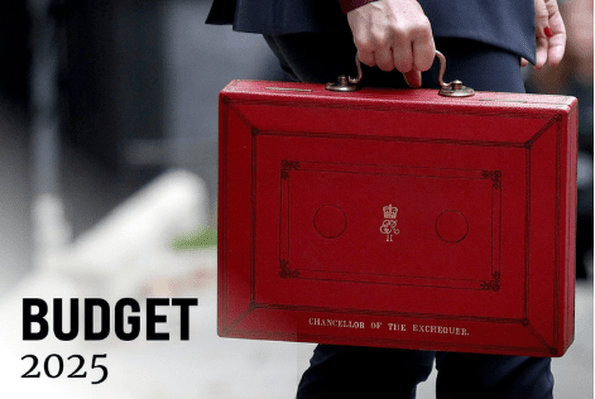
Autumn Budget 26 November 2025
This was Rachel Reeves’ 2nd Budget as Chancellor since the current Government was elected in 2024. We would not blame anyone for thinking that the Budget had been going on for at least a month or so beforehand with all the briefing and media announcements in advance. Those briefings seemed designed to see what tax changes were palatable in a political sense rather than what was actually sensible. The days of Budget ‘purdah’ are long gone it seems.
Cynically, it could be said that these briefings are designed to make us think that the actual Budget could have been worse. However, the measures will increase the tax take to more than ever before and there are more losers than winners from this.
The Chancellor was not helped by a lot of her measures being announced by the Office of Budget Responsibility (OBR) publishing their report into the financial measures about an hour before she started her speech rather than as she completed it.
The Budget was bereft of measures to encourage businesses with the growth and productivity gains the UK so badly needs. This is odd given the Government’s apparent commitment to growing the UK economy.
The expected growth in the UK economy remains very low at 1.5%, according to the OBR forecast. However, this is actually better than predicted 6 months ago when they were working on 1%. This slight increase has helped the Chancellor create some headroom in later years. Whether these forecasts are credible is certainly doubtful in our eyes.
The OBR’s report says that the Budget will raise taxes by around £26bn by 2029/30. This will bring the tax take to an all-time high of 38% of GDP in 2030/31.
The full government statement can be found here:
https://www.gov.uk/government/collections/budget-2025
Key changes were as follows:
Income Tax
No changes to headline rates but Allowances frozen to 2031 (previously frozen to 2028). Allowances have now been frozen since 2021, bringing significantly more people into higher rates of tax than they would have otherwise paid.
Those receiving Interest, Dividends and Property Income will see a rise in taxation of 2% across the board.
Dividend taxes increase in April 2026. The ordinary rate will rise from 8.75% to 10.75%, and the higher rate from 33.75% to 35.75% from April 2026. The additional rate will remain unchanged at 39.35%. The £500 tax free dividend allowance will continue. Owner managers of companies may find it cheaper, in terms of overall tax take, to be paid by salary rather than by dividends from April 2026.
Tax on savings income (interest) will increase by 2 percentage points across all bands. The basic rate will rise from 20% to 22%, the higher rate from 40% to 42%, and the additional rate from 45% to 47% from April 2027 (a year later than the dividend changes).
Basic Rate taxpayers can receive £1,000 of interest without paying tax, and Higher Rate taxpayers can receive £500 without paying tax.
The government is also creating separate tax rates for property income. These separate rates mean property income will have its own individual tax rates (as already occurs for the taxation of savings and dividend income). From April 2027, the property basic rate will be 22%, the property higher rate will be 42% and the property additional rate will be 47%. Finance cost relief will be provided at the separate property basic rate (22%).
National Insurance
No changes to rates were announced.
From 2029 National Insurance will be chargeable on Pension Salary sacrifices of greater than £2,000.
Employers will be required to report the sacrificed pension via the payroll system after April 2029.
Given this is likely to be around the time of the next election it may never actually happen.
Capital Gains Tax
There were no material changes to the Capital Gains Tax regime.
As a reminder the lower rate of Capital Gains Tax increased to 18% from 10% and the higher rate will be increased to 24% from the current 18% in April 2025
Capital Gains from Carried Interest is taxed at 32% from April 2025.
The Business Asset Disposal Relief Lifetime allowance is maintained at £1m but the rate rose to 14% from April 2025 and 18% from April 2026. If you have a business to be sold soon or subject to a Members Voluntary Liquidation it may be tax wise to complete such a transaction before the further increase to 18% in April next year.
One niche area that did see changes was the reduction of Capital Gains Tax relief on qualifying disposals to employee ownership trusts from 100% to 50% from 26 November 2025.
Corporation Tax
No changes to existing rates, effectively 19% on annual profits to £50,000, 26.5% on profits between £50,000 and £250,000 and 25% on profits over £250,000.
Changes have been made to the writing down allowances available on an annual basis after the use of the Annual Investment Allowance. These reduces to 14% (from 18%) effective 1 April 2026.
If companies have excess expenditure above the £1m Annual Investment Allowance (full expensing on capital assets) a new first year allowance will apply of 40%.
Client’s with large written down values brought forward or who are likely to spend in excess of the AIA of £1m in one financial year should discuss this with us, in advance, to ensure the tax consequences are well understood.
One sting is that Corporation Tax Return late filing penalties are doubled, effective 1 April 2026.
Stamp Duty Land Tax
No changes.
Council Tax
The government has announced the introduction of a new High Value Council Tax Surcharge. From April 2028, owners of properties identified as being valued at over £2 million or more in 2026 will be liable for a recurring annual charge which will be additional to existing Council Tax liability.
High Value Council Tax Surcharge charging structure
Threshold (£m) | Rate (£) | |
|---|---|---|
£2.0-2.5 | £2,500 | |
£2.5-3.5 | £3,500 | |
£3.5-5.0 | £5,000 | |
£5+ | £7,500 |
The valuations will recur every 5 years. This surcharge will be collected as part of the usual Council Tax routine by the local authority but the money is passed on to central Government.
VAT
No changes.
Inheritance Tax
Rates and allowances maintained until 2031 (previously 2030).
As well as the above changes we also have the changes announced in the 2024 Budget that apply from 6 April 2026, which are:
Inherited pension funds will now be subject to IHT.
Business Property Relief and Agricultural Property Relief is reformed to introduce a combined cap of £1m of IHT free. Beyond that assets are taxed at a rate of 20%, half that of other assets.
It was confirmed that the Agricultural Relief and Business Relief allowance of £1m on which 100% relief from IHT is still available, is transferable between spouses (like other IHT reliefs). So you can get double allowance on 2nd death if the asset passes in full to the surviving spouse on first death and the unused allowance is not wasted on first death.
A reminder that AIM shares previously qualifying for Business Property Relief will now be subject to a 20% IHT rate (since April 2025).
Business Rates
Significant permanent reliefs for Leisure, Retail and Hospitality businesses.
Soft Drinks Levy
The day before the Budget the Health Secretary announced changes to the Soft Drinks Levy (AKA the Sugar Tax) regime to reduce the limit at which the tax kicks in to 4.5 grams per 100ml and expanding the base to certain other drinks.
To be clear, this tax does not apply to drinks made and served in cafés, restaurants and bars.
National Minimum Wage
The Prime Minister, Keir Starmer, announced just prior to the Budget that the National Minimum wage rates from 1 April 2026 would increase substantially for the second year running and well ahead of wage rate inflation. The 18-20 year old rate is designed to align with the above 21 rate in a few years, hence the even more significant rise. Employers will need to carefully review their wage structure to ensure they do not fall foul of these new rates come 1 April 2026.
Age | Rate from 1 April 2026 | Rate to 31 March 2026 | Rise |
|---|---|---|---|
21+ | £12.71 | £12.21 | 50p or 4.1% |
18-20 | £10.85 | £10.00 | 85p or 8.5% |
Apprentice or 16-17 | £8.00 | £7.55 | 45p or 5.96% |
Annual Minimum Wage equivalent of a 35-hour week
Age | from 1 April 2026 | to 31 March 2026 |
|---|---|---|
21+ | £23,132.20 | £22,222.20 |
18-20 | £19,747.00 | £18,200.00 |
Apprentice or 16-17 | £14,560.00 | £13,741.00 |
In addition to this, employers will face National Insurance costs on top of these wages plus increased employment rights from 2026 for employees in the Employment Rights Bill 2024 such as Statutory Sick Pay (funded by employers).
Please do get in touch with us if any of the measures above impact you or if you would like further explanation on how they may impact you.